Whether the weather be cold, Whether the weather be hot, We’ll weather the weather, Whatever the whether, Whether we like it or not…

•July 30, 2012 • Leave a Comment

“It’s a scientist’s duty to be properly skeptical, says Berkeley physics Prof. Richard Muller, who still says that much, if not most, of what is attributed to climate change is speculative, exaggerated or just plain wrong. He has analyzed some of the most alarmist claims and his skepticism about them hasn’t changed.

What has changed is his doubt about the very existence of global warming. And he is now going a step further: Humans are almost entirely the cause, he says.”

Berkeley Physics Professor Richard Muller: Conversion Of A Climate Skeptic – Science 2.0

What’s Past is Future

•April 26, 2012 • Leave a Comment

Image

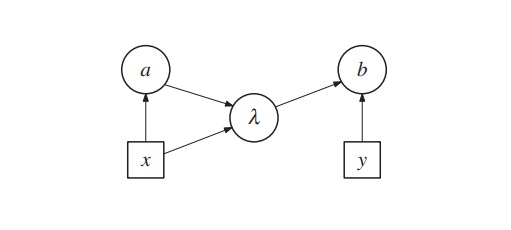
“Two pairs of entangled photons are produced, and one photon from each pair is sent to a party called Victor. Of the two remaining photons, one photon is sent to the party Alice and one is sent to the party Bob. Victor can now choose between two kinds of measurements. If he decides to measure his two photons in a way such that they are forced to be in an entangled state, then also Alice’s and Bob’s photon pair becomes entangled. If Victor chooses to measure his particles individually, Alice’s and Bob’s photon pair ends up in a separable state. Modern quantum optics technology allowed the team to delay Victor’s choice and measurement with respect to the measurements which Alice and Bob perform on their photons. ‘We found that whether Alice’s and Bob’s photons are entangled and show quantum correlations or are separable and show classical correlations can be decided after they have been measured,’ explains Xiao-song Ma, lead author of the study.

According to the famous words of Albert Einstein, the effects of quantum entanglement appear as ‘spooky action at a distance.’ The recent experiment has gone one remarkable step further. ‘Within a naïve classical word view, quantum mechanics can even mimic an influence of future actions on past events,’ says Anton Zeilinger.”

Quantum physics mimics spooky action into the past – Eurekalert.org

OPERA turned intermezzo?

•March 16, 2012 • 4 Comments


Image

“Neutrinos obey nature’s speed limit, according to new results from an Italian experiment. The finding, posted to the preprint server arXiv.org, contradicts a rival claim that neutrinos could travel faster than the speed of light.

‘Our results are in agreement with what Einstein would like to have,’ says Carlo Rubbia, the spokesperson for ICARUS and a Nobel prizewinning physicist at CERN. Neutrinos measured by the experiment arrived within just 4 nanoseconds of the time that light travelling through a vacuum would take to cover the distance, well within the experimental margin of error.”

Neutrinos not faster than light – ICARUS experiment contradicts controversial claim – Nature

Monday Morning Quarterbacking

•March 10, 2012 • 3 Comments

Einstein and Bohr

“Einstein said that there was no way quantum mechanics could include both entanglement and the belief that nothing could travel faster than the speed of light. If causing a change to one particle instantly caused a change in the other, how could it do so without violating such a basic principle? He called the whole thing ‘spooky action at a distance.’ Bohr was unable to come up with a reasonable argument in response. And neither has anyone else for that matter, though John Bell made it more palatable in 1964 by declaring entanglement a wholly new kind of phenomenon, which he dubbed ‘nonlocal.’ This is where Nikoli comes in. He says that had Einstein put forth his arguments regarding entanglement five years earlier during their debate about the Heisenberg principle, he could have won by suggesting that the photon escaping from the box was entangled with the box itself, thus quashing any possible response from Bohr. But alas, that was not to be…”

Physicist suggests Einstein could have beaten Bohr in famous thought experiment – Physorg.com 

Through the Looking Glass

•June 5, 2011 • Leave a Comment

“Canadian and international scientists have announced a major breakthrough in their ability to capture and store minuscule particles of antimatter, the mysterious substance described as a mirror image of everyday reality. It lies at the heart of the most fundamental questions in physics.

‘I call this a game-changer,’ said Makoto Fujiwara, a University of Calgary scientist and the lead author of a paper published in the journal Nature Physics.

‘The antimatter world is some sort of mirror world,’ he said.

‘We’re really peeking. There’s so many things were thought of as science fiction that we can seriously consider scientifically studying them. We’re really excited about this.’”

Mirror image: physics breakthrough offers peek at antimatter universe – The Canadian Press

_________________________________________________________________

“The findings can be summarized as follows. (1) We have demonstrated confinement of antihydrogen atoms for 1,000 s. Our calculations show that these atoms are very probably in the atomic ground state after ~1 s, providing the first indication that anti-atoms have been prepared in the ground state, as required for precision spectroscopy. (2) From the distributions of annihilations in time and position of the released anti-atoms, information on the kinetic-energy distribution of the trapped antihydrogen was obtained for the first time. Our data are consistent with a model in which antihydrogen is produced from antiprotons thermalized in a positron plasma. Furthermore, from our detailed simulation studies, several features of trapping dynamics have been identified, including the possibility of measuring anisotropic energy distributions.”

Confinement of antihydrogen for 1,000 seconds – Nature Physics

Aaron O’Connell: Making sense of a visible quantum object

•June 2, 2011 • 2 Comments

Physicists are used to the idea that subatomic particles behave according to the bizarre rules of quantum mechanics, completely different to human-scale objects. In a breakthrough experiment, Aaron O’Connell has blurred that distinction by creating an object that is visible to the unaided eye, but provably in two places at the same time. In this talk he suggests an intriguing way of thinking about the result.

Aaron O’Connell is the first person to experimentally induce and measure quantum effects in the motion of a humanmade object, bridging the quantum and classical worlds.

The Need for Uncertainty

•March 9, 2011 • Leave a Comment

“Information theory, to be ontologically real, must rest on something like Feynman’s formulation of quantum mechanics.

And, startlingly, this seems to rule out the Bohmian interpretation of quantum mechanics in which the behavior of the total system is deterministic, but merely epistemologically unknowable. Here information would not be ontologically real.

In short, if we think information is ontologically real, we seem stuck with its base in quantum mechanics and quantum ontological Possibiles.”


Information Needs Quantum Indeterminacy – NPR

 
Follow

Get every new post delivered to your Inbox.

Join 25 other followers